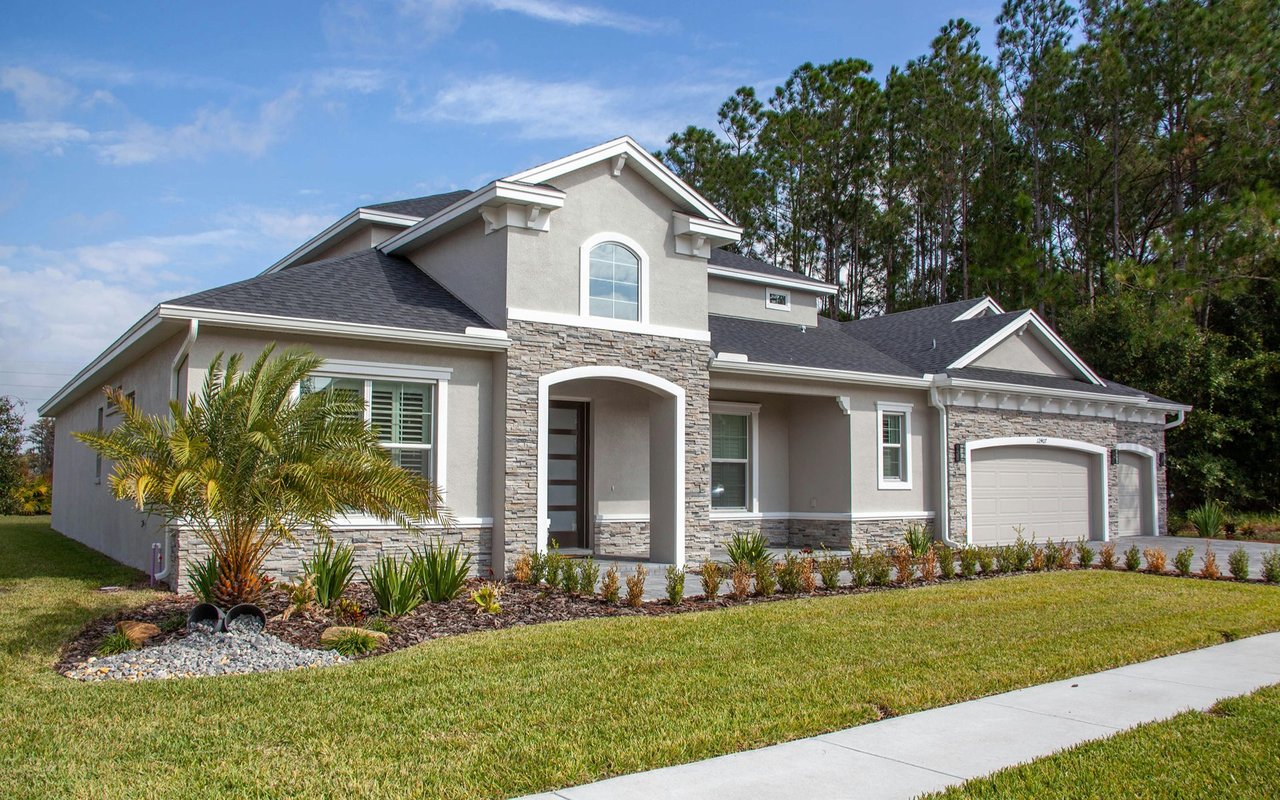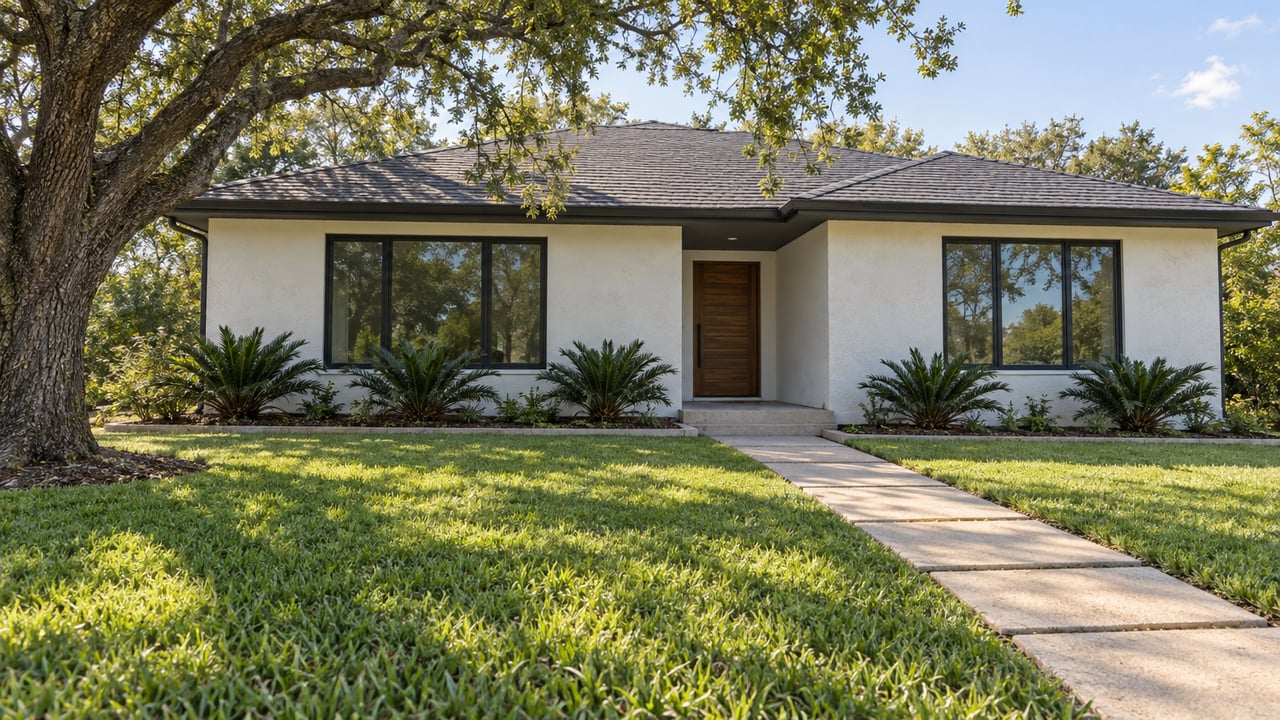
If two families on the same Virginia Park block both claim a homestead exemption in 2027, will Amendment 3 treat them the same? Under the ballot language Florida voters will see on November 3, 2026, the answer depends on a date that has nothing to do with either family's closing: whether each household was a Florida permanent resident on December 31, 2026.
The ballot summary says this directly. People who are not Florida residents on that date "will receive the existing homestead exemption upon qualifying for a homestead exemption, with the increased homestead exemption beginning with the fifth year of exemption, to the extent permitted by the U.S. Constitution."
For anyone relocating to South Tampa this fall or next year, that sentence matters more than the headline number. Read alongside the parts of Florida tax law the amendment leaves alone, it means the measure could widen the gap between what a newcomer pays and what an established neighbor pays on a comparable house.
The date that sits outside the transaction
Most purchase timelines are built around inspection periods, financing contingencies and a closing date. Amendment 3 adds a calendar date that none of those documents control. The official 2026 amendment booklet from the Florida Department of State spells out the structure:
This amendment increases the homestead exemption, for all non-school taxes, to $150,000 in 2027 and $250,000 in 2028, and adjusts for inflation thereafter.
The amendment would take effect January 1, 2027, and only if at least 60% of voters approve it.
Attorneys at Bilzin Sumberg, writing on September 2, 2026, pointed out that the test is about "maintaining a 'permanent residence' in Florida," which they treat as more than paperwork. They listed evidence that may count depending on the circumstances, including a Florida driver's license, voter and vehicle registration, a declaration of domicile, and changed mailing and financial addresses. They also separated two questions a relocating buyer can easily blur together: when Florida becomes your state of residence, and when a particular property becomes your homestead. Bilzin Sumberg's analysis says new residents would start with an exemption of up to $50,000 of assessed value for non-school levies and could become eligible for the increased exemption beginning in their fifth exemption year.
The resolution doesn't define residency for people who don't own property. The Florida Policy Institute argues that renters with real Florida ties could still miss the early eligibility date if they haven't bought a home or claimed a homestead. That covers a common relocation pattern, where a family rents in Tampa for a year while it learns the neighborhoods.
What a South Tampa tax bill is made of
The exemption applies only to non-school taxes, so the size of the school share decides how much of a bill the amendment can touch. The Hillsborough County Property Appraiser's final 2025 millage schedule lists these rates for a City of Tampa parcel:
| Levy, 2025 final rates | Mills | Touched by Amendment 3's larger exemption? |
|---|---|---|
| City of Tampa | 6.2076 | Yes |
| Countywide general revenue | 5.4608 | Yes |
| County library | 0.5583 | Yes |
| Transit | 0.5000 | Yes |
| Children's Board | 0.4589 | Yes |
| SWFWMD operating | 0.1831 | Yes |
| Port Authority | 0.0737 | Yes |
| Environmental lands | 0.0604 | Yes |
| Local school | 3.2480 | No |
| State school | 3.0920 | No |
Those levies add up to about 19.84 mills in 2025, and the two school levies make up about 6.34 of them. Roughly a third of a City of Tampa homestead's 2025 millage sits outside the amendment's reach. The other 13.5 mills or so are the part a bigger exemption would reduce. At 2025 rates, each additional $100,000 of exempt assessed value is worth about $1,350 a year in non-school taxes. The Hillsborough County Tax Collector notes that the water management district levy varies by watershed basin, so a given parcel's figure can differ slightly.
The 2026 schedule isn't complete yet. Tampa City Council adopted a 6.2076-mill city rate for FY2027 at its September 22, 2026 hearing, the same as the 2025 city rate. Hillsborough County adopted an FY2027 aggregate of 8.6864 mills, which was reported as 0.40% above the prior aggregate. The school board's 6.3340-mill package from its July 2026 first hearing was tentative, and no final adopted school split was available as of October 2026. So the one-third proportion is a 2025 figure. It isn't a forecast.
The reset the amendment leaves in place
The change Amendment 3 doesn't make is the one that already separates newcomers from long-time owners. The Property Appraiser explains that a homestead is first assessed at market value, and annual increases after that are capped at 3% or the change in CPI, whichever is lower. When a property changes hands, its assessed value resets to full market value as of the following January 1, and the new owner has to apply for the exemption. The Florida Department of Revenue lists the cap for 2026 assessments at 2.7%.
The amendment's text in the state booklet keeps that ceiling, the reset on change of ownership and portability, with the transferable difference still capped at $500,000.
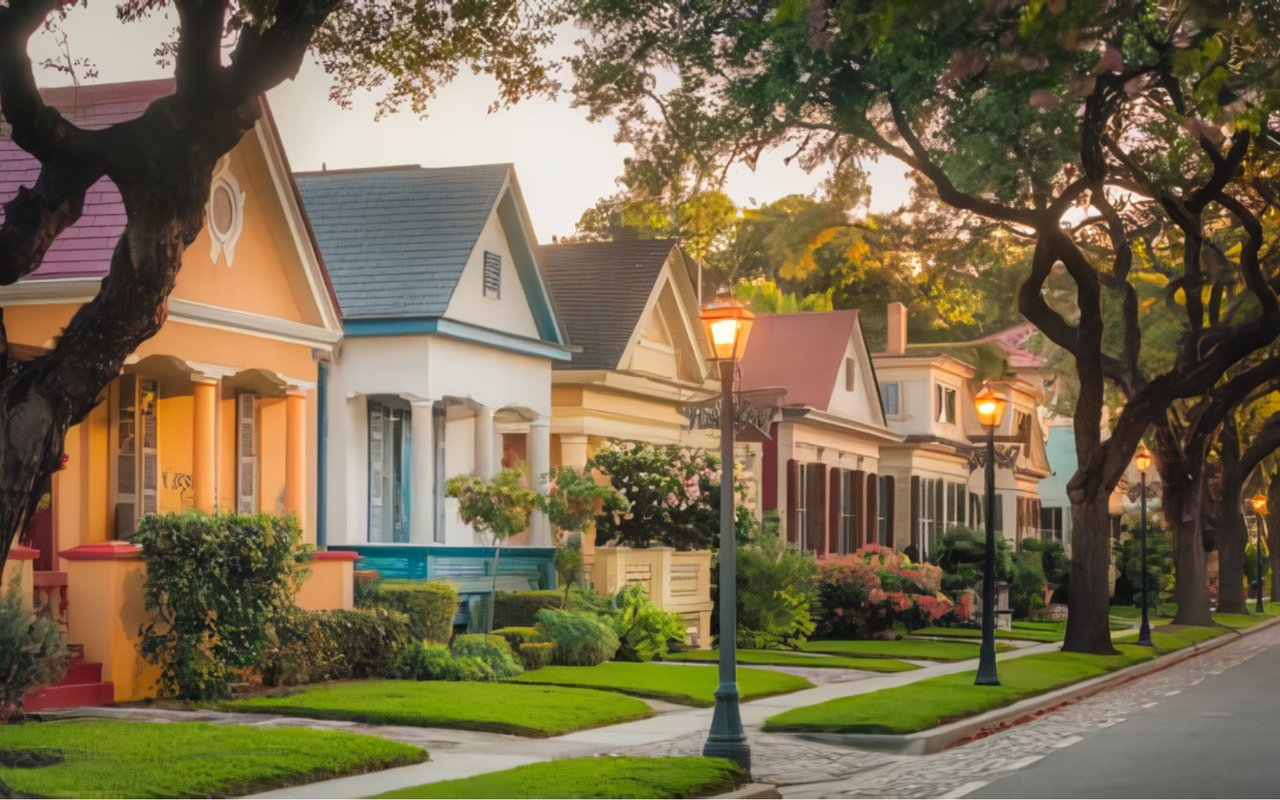
Here is what that means on a single Virginia Park street, where 360 Realty's neighborhood guide puts median single-family values around $1.35 million in 2026. An owner who has held a home for many years has an assessed value well below market. A buyer who closes next spring starts at market value. Today those two households share the same exemption structure. Under Amendment 3, an owner who was already a resident gets the $150,000 exemption in 2027 and $250,000 in 2028. A buyer who wasn't a Florida resident on December 31, 2026 keeps the existing exemption until the fifth exemption year. The reset already makes the newcomer's taxable base larger, and the delay would hold back the newcomer's share of the cut for four years on top of that.
The exemption is also a flat dollar amount. $250,000 removes a larger share of the non-school taxable value on a low assessment than on a $1.35 million one, even when both owners qualify.
Here is how three buyer profiles line up under the ballot text:
| Profile | Assessed value basis | Non-school exemption, 2027–2028 |
|---|---|---|
| Long-time Virginia Park owner | Capped by Save Our Homes | $150,000, then $250,000 |
| Florida resident by Dec. 31, 2026, buying in 2027 | Resets to market value | $150,000, then $250,000, once the homestead qualifies |
| Arrives in Florida after Dec. 31, 2026 | Resets to market value | Existing exemption until the fifth exemption year |
A buyer moving within Florida keeps portability, which is the one tool that carries an old cap advantage into a new home. According to the Department of Revenue's brochure, the new homestead and portability applications are due by March 1, and the transfer has to happen within three years of January 1 of the year the prior homestead was given up. Hillsborough's FAQ repeats the $500,000 maximum and says portability is applied for together with the new homestead.
Where the rest of the measure lands
Two other provisions affect South Tampa buyers who own more than one property. The amendment would cut the annual assessment cap on non-homestead property from 10% to 5% for non-school levies. That covers a home kept as a rental after a move-up purchase. The text applies to non-homestead residential property of nine or fewer units as well as other real property. It would also restrict county and city property-tax spending to listed categories such as public safety, infrastructure and debt service, while still allowing other spending approved by local governing bodies unless general law prohibits it.
The revenue estimates differ depending on who produced them. The Tampa Bay Times reported in July that state economists projected Hillsborough's loss at more than $260.8 million in FY2028, $467.6 million the year after, and nearly $702 million by FY2032. The same story cited the county property appraiser's separate projection of $367 million a year once the $250,000 exemption begins in 2028. The two estimates don't explain their assumptions, so neither replaces the other. In September, the Tampa Bay Times reported that Mayor Jane Castor said the city could lose roughly $43 million in general-fund money "right off the bat," and that the city adopted its budget with the amendment's uncertainty in mind.
How settled any of this is
The measure may not pass. A St. Pete Polls survey for Florida Politics, fielded October 5–7, 2026, found 42% support, 35% opposition and 23% undecided. That was down from 45% support in the same pollster's September survey, and Tampa-market voters in the October poll stood at 40% support. The same article cited a Mason-Dixon poll fielded September 28 through October 1 that found 55% support.
The wording has already changed once. After a Leon County circuit judge's ruling, the original "Save Our Homes From Excessive Property Taxes" title was replaced and the summary rewritten, and the state did not appeal, according to Florida Politics. The five-year provision itself could face a challenge. The Real Deal, summarizing Miami Herald reporting in June, noted that Florida's Supreme Court struck down a similar waiting period about 40 years ago. The ballot's own phrase, "to the extent permitted by the U.S. Constitution," leaves that question open.
FAQ
Does Amendment 3 change the reset to market value after a purchase? No. The Save Our Homes cap, the reset on change of ownership and the $500,000 portability limit all stay in place under the amendment text published in the state's ballot booklet.
What is the current homestead exemption? The Department of Revenue describes it as $25,000 applied to all taxes, plus a second, inflation-adjusted exemption on assessed value above $50,000 that applies only to non-school taxes. That second exemption was $25,722 for tax year 2025. The 2026 indexed figure hadn't been published in the material reviewed as of October 2026.
When would the larger exemption first appear? If the amendment is approved, the $150,000 exemption would apply in 2027 and $250,000 in 2028 for those who qualify, with inflation adjustments beginning in 2029.
Does closing on a Virginia Park home before December 31 settle residency? Bilzin Sumberg's analysis treats state residency and homestead qualification as two separate questions, and permanent residence rests on a wider set of facts than a deed alone.
If your South Tampa purchase timeline runs close to December 31, 2026, 360 Realty can walk you through how the ballot language, the Save Our Homes reset and portability would apply to your contract dates, with our attorney-led team and affiliated title services working from the same timeline. Contact Us to set up that conversation before the closing calendar fills.
This article is general information, not legal, tax or financial advice. Consult a qualified professional about your situation.